Coastline Fonts: Script Amp for Local Branding
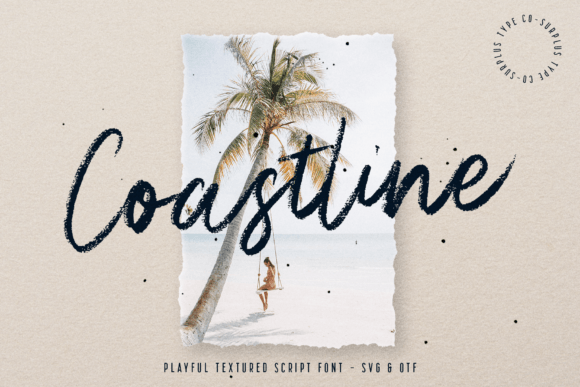
As a brand designer who spends most of my week refining identities for local entrepreneurs, I am always on the hunt for typography that feels authentic rather than manufactured. When I first opened Coastline, my immediate impression was one of organic warmth mixed with a distinct, tactile edge. This isn't just another smooth script; it carries a texture that suggests something handmade, weathered by the sea, or crafted with care in a small studio. For small business branding, this mood is invaluable. It instantly communicates a personality that is friendly yet premium, rustic yet elegant, making it a perfect candidate for businesses that want to stand out on a crowded shelf without shouting.
Bringing a Local Bakery to Life with Textured Typography
To truly evaluate this graphic design asset, I imagined a real-world scenario: rebranding "The Salty Crumb," a local artisanal bakery known for its sourdough and sea-salt cookies. The owner wanted a brand identity that felt established but approachable, moving away from the sterile look of chain stores. Coastline fit this brief immediately. The textured strokes mimic the roughness of flour-dusted tables or the grain of wooden signage, creating an emotional connection before the customer even tastes the product.
Using the .otf version allowed for clean integration into the primary logo design, while the SVG format offered a heavily textured result that added depth to larger promotional pieces. This duality is crucial for commercial design. You aren't stuck with one look; you can choose the level of distress based on the medium. For the bakery's main storefront sign and website banners, the SVG version provided a rich, illustrative quality that acted as a hero graphic. For smaller applications like price lists or ingredient stickers, the standard font file ensured legibility while maintaining that signature character.
Elevating Packaging Design and Product Labels
In the realm of packaging design, first impressions are everything. A product label needs to do more than list ingredients; it needs to sell a story. Coastline excels here by adding a layer of sophistication to simple packaging. Imagine a handmade soap brand or a boutique candle shop. Applying this typeface to a kraft paper label or a glass jar creates an instant perception of quality. It suggests that the product inside is crafted with the same attention to detail as the typography itself.
The asset supports better visual hierarchy on packaging. Because the letters have such distinct personality, they naturally draw the eye to the product name, pushing secondary information like weight or scent notes into the background where they belong. This leads to stronger product recognition on retail shelves. When a customer scans a aisle of generic sans-serif labels, the textured flow of Coastline stops them in their tracks. It improves shelf appeal significantly, turning a commodity into a desirable object.
Furthermore, for printable design elements like hang tags, thank-you cards, and stickers included in shipment boxes, this font adds a polished, professional touch. It reinforces the idea that the local business cares about the unboxing experience. Whether used on a festive holiday campaign visual or a standard shipping insert, the typeface maintains consistency across all marketing visuals.
Strategic Applications for Social Media and Web
Beyond physical products, Coastline translates beautifully to digital spaces. For social media graphics, particularly on platforms like Instagram where aesthetics drive engagement, the textured script provides excellent contrast against solid color backgrounds or lifestyle photography. It works wonderfully for quote graphics, announcement headers, and story highlights. The SVG design capabilities mean that for web design, the font can be rendered with crisp edges that scale perfectly on high-resolution screens, ensuring the brand looks professional on mobile devices and desktops alike.
When creating product mockups for client presentations, using Coastline helps visualize the final brand potential. It allows stakeholders to see how the brand identity will feel in context, whether it's a menu graphic for a coffee shop or a poster for a florist's seasonal sale. The font's versatility supports various design assets, from editorial layouts in a lookbook to digital ads promoting a new collection.
Where to Use Caution in Professional Branding
While Coastline is a powerful tool, experienced designers know that no font is a universal solution. There are specific scenarios where this asset should be used carefully. It is likely not suitable for formal corporate branding where neutrality and strict clarity are paramount. Additionally, due to its textured nature, it can struggle in very small sizes. If you are designing an ingredient-heavy layout or an area dense with legal information, the decorative strokes might reduce readability.
It is also important to consider contrast. On low-contrast backgrounds or busy patterns, the texture of the font might get lost, making the text appear muddy. For luxury minimalist brands that rely on stark, thin lines and vast white space, the rustic charm of Coastline might compete with the desired aesthetic of ultra-modern simplicity. In these cases, pairing it with a clean sans serif font for body copy is essential to maintain balance.
Practical Notes for the Working Designer
Before committing to Coastline for a client project, there are several practical steps I recommend. First, always test the font on real product mockups to see how the texture interacts with different materials like matte paper, glossy plastic, or fabric. Check its performance in black and white to ensure the texture doesn't disappear when color is removed. Preview the font on small labels to confirm that the details remain distinct at reduced sizes.
Experiment with pairings. Coastline shines when juxtaposed with a sturdy serif font or a geometric display font. This combination creates a dynamic range in your visual hierarchy. If you are using tools like Canva or other template-based systems, verify how the PNG design exports look if you are using pre-rendered versions, or ensure the SVG files are editable if your workflow requires vector manipulation.
Finally, and perhaps most importantly, always review the licensing terms. Ensure you have the appropriate commercial license before using this digital product for client work, physical product sales, or broad distribution. Understanding the rights associated with Script Amp and similar creative marketplace items is vital for protecting both your agency and your client. By treating Coastline not just as a font, but as a strategic component of professional branding, you can unlock its full potential to build trust and recognition for any handmade business or local enterprise.